
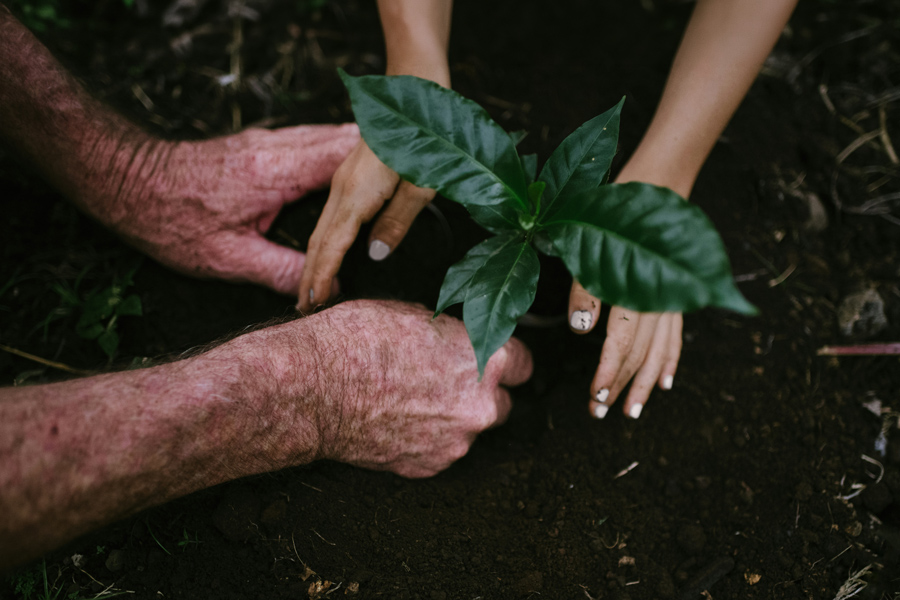
Most of us have thought about what we want for the people who come after us. A good education, a stable home, some spiritual depth to carry them, maybe some financial breathing room. For many of us that picture starts with children and grandchildren, but it doesn’t have to. It might be a niece, a neighbor’s kid, a community we’ve poured into for years.
But what about what we leave behind, not just what we hope for: our own character, the things we’ve learned the hard way, the values that took us decades to settle into. That’s a kind of inheritance that doesn’t show up on any account statement.
My grandfather had the best stories. As a kid I used to beg him to tell the one about the Great Depression, when his family lived in a tent in a park and neighbors would come in the night to bring them food and leave before anyone had to say thank you. His family was proud, and taking help from others didn’t come easily to them, so the neighbors just left it and walked away. I must have heard that story a dozen times and I never got tired of it. My grandmother had her own way of showing me what mattered. In their little railroad town, she hosted coffee time twice a day, ten in the morning and three in the afternoon, and any neighbor who wanted company was welcome at her table.
They’ve both been gone for many years now. But who they were, and how the Depression and that tiny town shaped them, is still part of my story. Those neighbors could have come by daylight, handed over the food, and let my grandfather’s family thank them properly. Instead they came under cover of night and walked away before anyone could, because they understood that being on the receiving end of help is hard enough without an audience for it. My grandmother’s open door worked the opposite way. She made sure no one in that town ever had to be alone with a hard week if they didn’t want to be. What I carry from them has very little to do with money and a lot to do with that kind of dignity, the kind that costs the giver a little more so the person receiving it can keep their head up.
Some of us don’t have children or grandchildren in our own picture. The question just widens for us. Who do we want to remember us, and for what? Maybe a niece, a neighbor, or a colleague who watched how we handled a hard season, or a community we poured into. Legacy was never only a family word, my grandmother proved that twice a day for years at her own kitchen table.
I think about this kind of legacy as something we’re already building, right now, whether we’ve named it or not. And when it sits in the front of our minds instead of the back, it starts to filter the choices in front of us, from the way we spend a Saturday to the conversations we have or avoid having with our adult kids. It shows up in where the money goes and where it doesn’t.
A legacy mindset seems to make us more intentional. More aware that the small stuff is adding up to something bigger than itself, even on the days it doesn’t feel like it. I don’t have this fully figured out. But I keep thinking about it, especially in this season of life, when what we pass on starts to matter more than what we accumulate.
I still don’t know the whole story of what my grandparents intended to leave behind. I doubt they thought of it in those terms at all. They just lived their values out loud, and somehow that became the thing that lasted. If someone wrote down what they learned from watching your life, what would be in it? And what would you hope they wrote down that you still have a chance to live out?